American Adenium
Adenium obesum 'Black Fire' — Velvet Black to Crimson Desert Rose Seeds
Adenium obesum 'Black Fire' — Velvet Black to Crimson Desert Rose Seeds
Couldn't load pickup availability
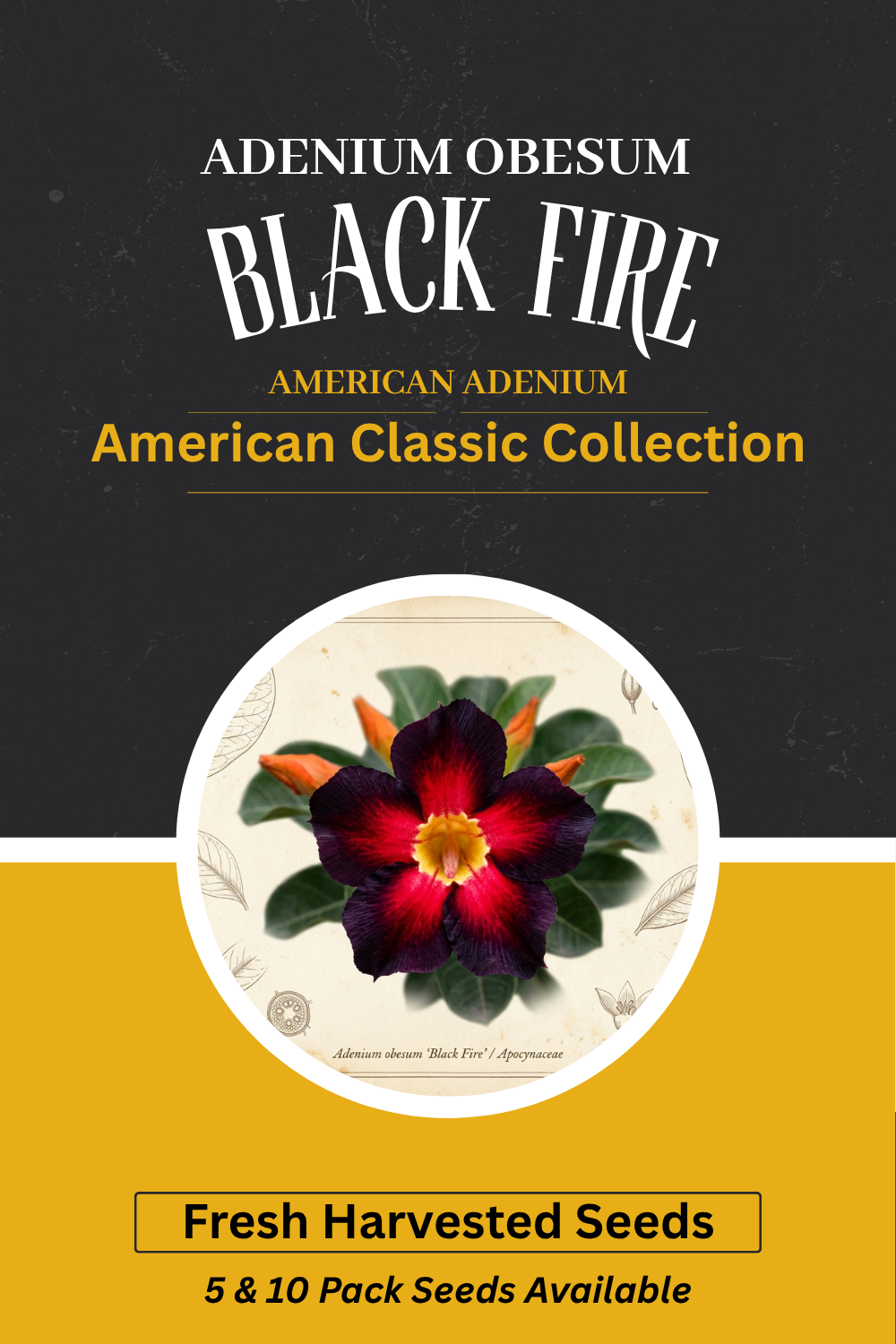
Adenium obesum 'Black Fire' is the highest-contrast obesum I offer seed for — near-black velvet outer petal margins burning inward through fire-engine crimson-red, with a bright golden-yellow star throat at the core. It photographs like an ember caught mid-burn, and it holds that contrast in person better than most "black" adenium claims do.
Flower Form
Single-to-multi-petal star-shaped blooms. Petal count runs some natural variation across a seed batch, same as any hybrid line — most seedlings hold the dark-rimmed, fiery-red pattern true, with individual plants varying slightly in petal layering and how deep the black-purple edge runs.
Color
Midnight-black to deep velvet purple at the outer margins, bleeding into a rich fire-engine red through the mid-petal, opening to a sharp golden-yellow throat at the center. Full, intense sun is what pulls the deepest charcoal and black tones out of the petal edge — this is not a variety to grow in partial shade if you want the dramatic contrast the name promises.
Caudex & Growth Habit
Fast-growing obesum habit. Builds a classic thick, swollen basal caudex without the slow, deliberate pace some of the specialty arabicum lines carry — a good pick if you want visible caudex development in a shorter window, whether you're training it as a sculptural bonsai subject or growing it out as a straightforward swollen-base specimen.
From Seed
These come from hand-pollinated mother plants through my top Thai breeder network. Hand-pollinated seed inherits strong parent traits, and a high percentage of this batch's seedlings will show the distinctive dark-rimmed, fiery-red flower. You'll still see natural genetic variation plant to plant — some individuals running slightly lighter on the black edge or carrying a different petal count. That range is normal for hybrid obesum and part of what makes growing from seed worth the wait over buying a grafted plant.
Zone 6 Notes
I run obesum outdoors in Northern Kentucky from late May through early September, then bring everything in before overnight lows approach 50°F. Full sun is non-negotiable with this one if you want the black-edge contrast to actually show — indoors under lights over winter, expect the dark tones to soften some until the plant is back under real intensity next season. That seasonal shift in color depth is normal, not a sign anything's wrong.
WHAT'S INCLUDED
- Fresh hand-harvested Adenium obesum 'Black Fire' seed (select quantity above)
- Germination and seedling care instructions with every order
GROWING BASICS
- Soak: Warm water soak, 2–4 hours before sowing, to hydrate the seed coat
- Substrate: Fast-draining, highly inorganic mix — 50/50 pumice and coco coir works well. Cover lightly with a thin layer of medium or fine grit.
- Germination temp: 80–90°F, with high humidity under a dome or baggie
- Germination time: 3–7 days typical
- Light: Bright indirect immediately after sprouting, gradually acclimating to full sun
- Hardiness: Bring indoors before temps drop below 50°F
What We're Growing With
Seeds are only half the equation — germination success comes down to the setup. Here's what I use:
∙ Desert Oasis Potting Media — the fast-draining inorganic mix built for Adenium, Plumeria, and caudex seedlings once they're up and potted on.
∙ Luxbird Seed Germinator & Propagation Kit — bottom heat and a humidity dome, the two things that push obesum germination toward the 90%+ range.
∙ 5×5 Germination Tray — sized for clean single-variety sowing so nothing gets crossed up.
See the full Desert Oasis media range at americanadenium.com.
Michael White — ISA Certified Arborist (KY-0847A), Kentucky Master Gardener. Growing Adenium in Zone 6 since 1994.