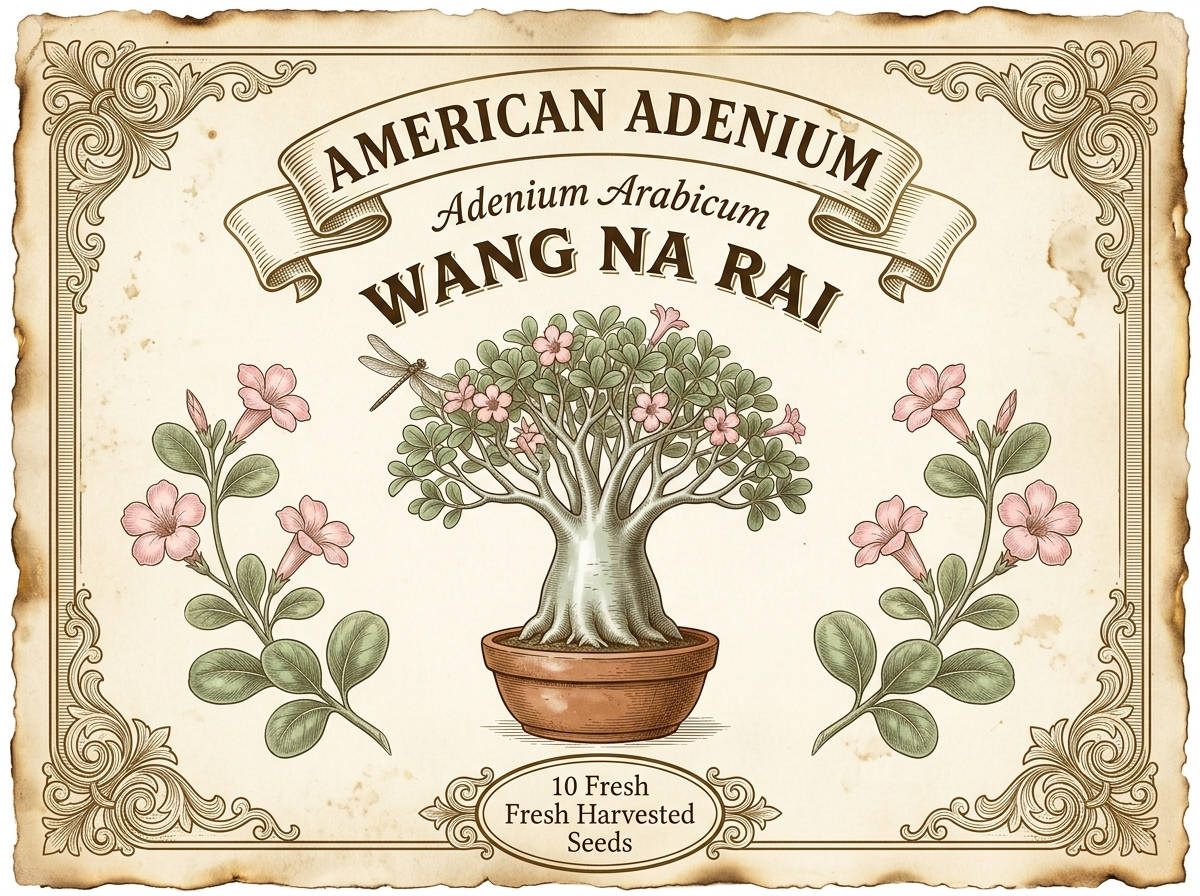
American Adenium
Adenium arabicum 'Wang Na Rai' — Premium Thai Bonsai Form Seeds
Adenium arabicum 'Wang Na Rai' — Premium Thai Bonsai Form Seeds
Couldn't load pickup availability
FREE U.S. SHIPPING ON ORDERS $75+
Adenium arabicum 'Wang Na Rai' is a premium Thai lineage selection bred and refined by master growers in the Lopburi region of Thailand. The name translates directly to its geographic origin — Phra Narai Ratchaniwet, known locally as Wang Narai (King Narai's Palace) — placing it in the same category as historically significant Thai regional selections like Phet Na Wang and Yak Lop Buri.
This variety is grown and collected for one reason above all others: its caudex architecture.
Caudex & Root Structure
Wang Na Rai develops a squat, wide, muscular base with a multi-directional root spread that collectors describe as having "Rambo" root traits. The trunk stays low and broad — almost completely horizontal — with very little vertical elongation. It's the kind of form that takes most arabicum growers years of training to approach, and Wang Na Rai delivers it from early in development.
Branching
Apical dominance is naturally suppressed in this line. Rather than pushing a single dominant vertical stem, plants produce dense clusters of thick, heavy, lateral branches with highly compressed internodes. Mature specimens develop a dense, crown-like canopy that reads like a finished bonsai composition.
Foliage
Leaves are large, broad, and obovate — true to arabicum genetics — with a slightly leathery texture and soft velvety pubescence on the undersides. The matte finish is distinctly different from the glossy leaves typical of Adenium obesum hybrids.
Bark & Skin
As plants mature, the epidermis develops a dark brownish-purple to silver-gray "antique" texture, showing prominent wrinkles and branch scarring at a relatively young age. The aging process is part of the visual payoff with this line.
Blooms
Wang Na Rai is not primarily a flower variety — it's a structure variety. That said, it produces a solid flush of classic trumpet-shaped, light-to-medium pink blooms. Mature specimens tend to flower heavily during cooler, drier windows, producing the striking effect of full blooms on a bare, sculptural bonsai framework.
Breeding Value
Wang Na Rai is widely used in advanced Thai arabicum cross programs. It pairs well with compact lines like Jao la Bird and Dwarf Emerald, consistently contributing its hallmark horizontal root spread and thick-limbed skeletal structure without losing compact habit. If you're building a breeding program around arabicum form, this is one of the anchor genetics worth having.
From Seed
These are seed-grown specimens. Arabicum genetics carry natural variation, and Wang Na Rai is known for reasonable genetic predictability within its line — you'll see the characteristic low, wide caudex development emerging in the first growing season under good conditions.
Zone 6 Notes
I grow arabicum outdoors in Northern Kentucky from late May through early September, then bring plants in before nighttime temps approach 50°F. Wang Na Rai's compact form makes it an excellent container subject for cold-climate growers — less vertical height to manage, more structural presence per square foot of growing space. Desert Oasis Potting Media is what I use for all arabicum seedlings to ensure drainage and air porosity from day one.
WHAT'S INCLUDED
- Fresh Wang Na Rai arabicum seeds (select quantity above)
- Germination instructions included with every order
GROWING BASICS
- Germination temp: 85–95°F
- Germination time: 5–14 days under ideal conditions
- Hardiness: Bring indoors when temps drop below 50°F
- Light: Full sun preferred; minimum 6 hours direct light
- Media: Fast-draining mineral mix strongly recommended
What You'll Need to Grow These
Seeds are only half the equation — germination success comes down to the right setup. Here's what I use:
∙ Desert Oasis Potting Media — the fast-draining inorganic mix built for Adenium, Plumeria, and caudex seedlings once they're up and potted on.
∙ Luxbird Seed Germinator & Propagation Kit — bottom heat and a humidity dome, the two things that push arabicum germination toward the 90%+ range.
∙ 5×5 Germination Tray — sized for clean single-variety sowing so nothing gets crossed up.
See the full Desert Oasis media range at americanadenium.com.