American Adenium
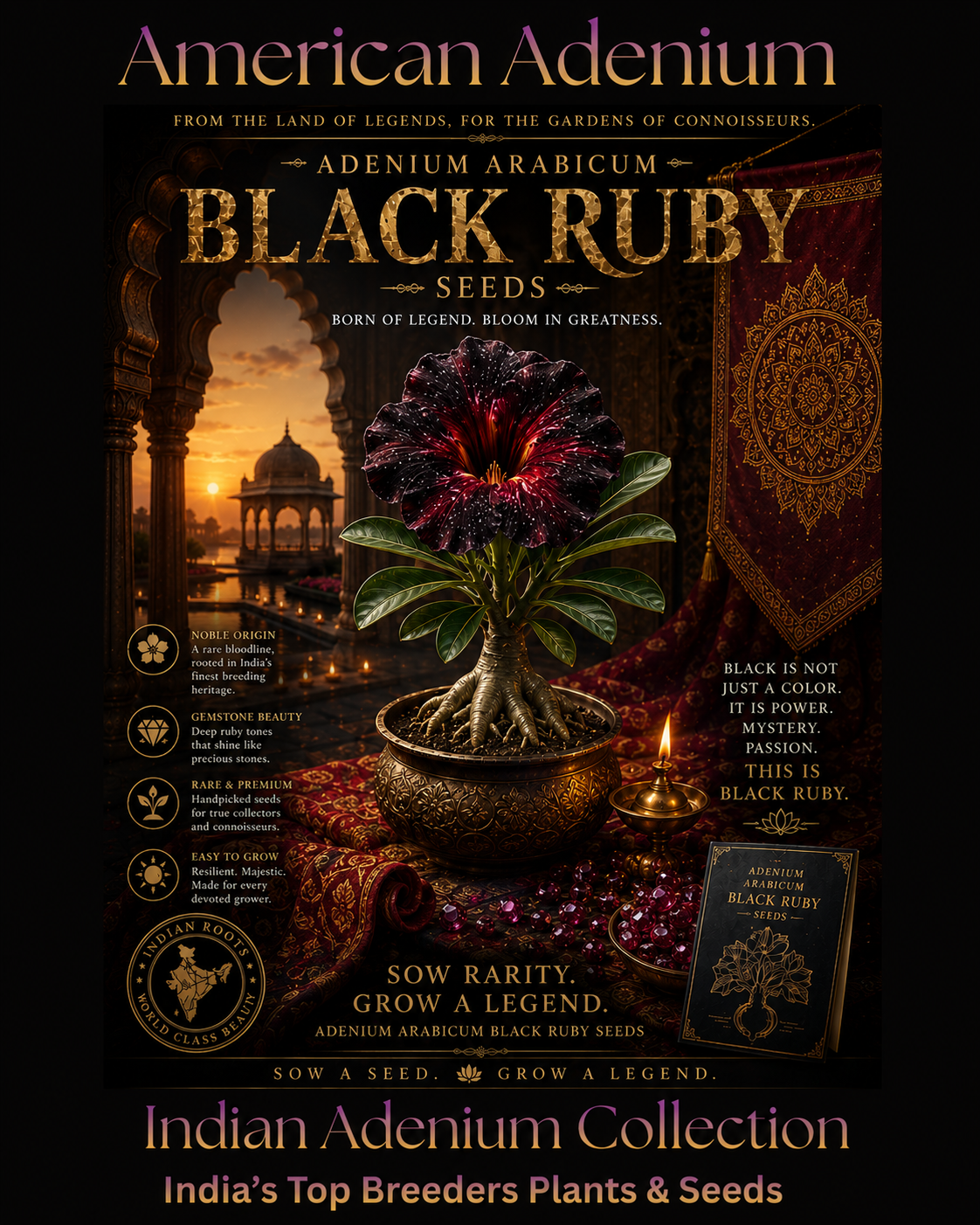
Adenium arabicum × 'Black Ruby' — Dark Flower Hybrid Seeds
Adenium arabicum × 'Black Ruby' — Dark Flower Hybrid Seeds
Couldn't load pickup availability
Adenium arabicum × 'Black Ruby' sits at the intersection of two very different adenium breeding objectives. Arabicum lines are bred for structural mass — low-slung, multi-branched, architecturally extreme caudex development. The obesum 'Black Ruby' cultivar was bred for one thing: flowers so deeply pigmented that the outer petal margins darken into smoky charcoal and near-black as the bloom matures. Combining them required generations of deliberate crossing and selection. The result is one of the most visually dramatic adenium hybrids available in seed form.
The Genetic Background
The 'Black Ruby' Flower Line
The original 'Black Ruby' (sometimes spelled 'Black Rubi') is a named Adenium obesum cultivar bred specifically for its heavily saturated deep-red-to-maroon flowers with ruffled petals and near-black margins. It established a benchmark for dark flower genetics in the adenium collector world — and became one of the most sought-after parent lines for breeders looking to push pigmentation deeper into hybrid crosses.
The Arabicum Foundation
A. arabicum is the structural workhorse of the Thai bonsai breeding world. Where A. obesum grows vertical and leggy, arabicum stays compact, multi-branched, and massively swollen at the base. The caudex architecture, the squat silhouette, the aggressive lateral root spread — all of that comes from the arabicum side of this cross.
The Bridge
Crossing these two species is not straightforward. It required sustained selection across multiple generations to stabilize the dark flower expression on an arabicum growth framework. What you are buying with this SKU is that accumulated breeding work — not a novelty cross, but a genuine hybrid line with a documented aesthetic outcome.
What to Expect at Maturity
The Flowers
This is the defining feature of the cross. Instead of the typical pale pink arabicum bloom, Black Ruby hybrids push large, heavily saturated crimson to deep velvety-red flowers. As blooms mature, the outer margins of the ruffled petals darken progressively into smoky charcoal and near-black. The effect is most dramatic under intense, direct, unfiltered sunlight — the same high-light condition that intensifies dark-skin bark pigmentation in Thai arabicum lines. Under filtered greenhouse light or low UV conditions, the black margins wash toward standard dark red. Give these plants full sun to get the full payoff.
Caudex & Bark
True to its arabicum heritage, the plant stays low, squat, and massively swollen. It will not grow vertical and leggy the way standard obesum does. The trunk skin typically develops a dark grayish-green, dull purple, or dark copper tone — a natural complement to the moody flower color. This dark bark-to-dark flower aesthetic is one of the most cohesive visual combinations in the arabicum hybrid world.
Foliage
Leaves are broader, thicker, and fleshier than standard obesum. Depending on how much arabicum influence dominates a particular seedling, texture ranges from slick and shiny to soft and velvety on the undersides — both are normal expressions within this cross.
Cultivation Notes — What You Need to Know
Seed Genetics & Flower Variability
Be clear-eyed about seed-grown dark flower hybrids: adenium flower genetics are highly variable from seed. The majority of seedlings from a well-selected Black Ruby arabicum cross will carry the deep red to dark flower trait — but a percentage will throw toward lighter red or deep pink. This is the nature of seed-grown hybrid adeniums across the entire collector market. If you require absolute certainty of pitch-dark Black Ruby blooms on every plant, grafting onto confirmed parent stock is the path. If you are willing to grow out a cohort and select the darkest-flowering individuals, seed is the most economical and structurally rewarding route.
Light for Pigmentation
Intense, unfiltered direct sunlight is mandatory to achieve the full dark margin effect on the petals. This applies equally to the bark tanning on arabicum-type caudex lines. These are full-sun plants — not suitable for partial shade positions if you want the Black Ruby color expression to fully develop.
Dormancy
The arabicum genetics drive a more defined, hard winter dormancy than standard obesum cultivars. When foliage begins to yellow and drop in late autumn, reduce watering dramatically and allow the plant to fully rest. Do not maintain a wet substrate through dormancy — arabicum hybrids held in moist conditions during their rest period are at high risk for caudex rot. A dry, warm overwinter with minimal to no water is correct management. Spring warming triggers the flush of dark velvety blooms on bare branches — the payoff for a properly managed dormancy.
Zone 6 Notes
I treat arabicum hybrids as a single group for outdoor season management in Northern Kentucky — outside after May 15 once nights are consistently above 50°F, indoors before the first hard frost in mid-October. The hard dormancy these plants want actually aligns well with Zone 6 conditions — they come in, go dry, rest in a warm basement or garage at 55°F minimum, and wake up in March or April ready to push. The Black Ruby flower flush on a bare, dark-barked arabicum caudex coming out of dormancy is one of the more striking things you can grow in this climate. Desert Oasis Potting Media is what I use for all arabicum hybrids — the mineral-dominant composition manages the dry-to-wet cycle dormancy management requires without holding residual moisture.
WHAT'S INCLUDED
- Fresh Adenium arabicum × 'Black Ruby' hybrid seeds (select quantity above)
- Germination instructions included with every order
GROWING BASICS
- Germination temp: 85–95°F
- Germination time: 5–14 days under ideal conditions
- Hardiness: Bring indoors before nighttime temps reach 50°F
- Light: Full, unfiltered direct sun required for dark petal margin expression
- Dormancy: Hard winter dormancy — reduce water dramatically when leaves drop
- Skill level: Intermediate — dormancy management is critical
What You'll Need to Grow These
Seeds are only half the equation — germination success comes down to the right setup. Here's what I use:
∙ Desert Oasis Potting Media — the fast-draining inorganic mix built for Adenium, Plumeria, and caudex seedlings once they're up and potted on.
∙ Luxbird Seed Germinator & Propagation Kit — bottom heat and a humidity dome, the two things that push arabicum germination toward the 90%+ range.
∙ 5×5 Germination Tray — sized for clean single-variety sowing so nothing gets crossed up.
See the full Desert Oasis media range at americanadenium.com.