Collection: Propagation, Containers & Bonsai

Propagation, Containers & Bonsai

The container is not a detail. It is a growing decision.

Most of what people call "genetics" in a caudex plant is actually container history. A seedling grown in a deep nursery pot puts its energy into a taproot you will never see. That same seedling grown in a shallow, wide training pot puts its energy into the caudex and the lateral roots you eventually lift and expose. Same seed. Different plant. The pot decided.

I have been growing Adenium, Plumeria, and Pachypodium in Zone 6 since 1994, and container strategy is where I see growers lose the most ground. Not watering. Not light. Containers. They germinate in something that holds too much water, they pot up too fast into too much volume, and then they wonder at year four why the plant is tall and skinny instead of squat and fat.

This collection is the hardware side of the operation: what you germinate in, what you grow on in, what you train in, and what you finally display in. Everything here is selected for fast-draining media and root work — not for houseplants that want to sit wet.

A note on media: none of this works without the right substrate. A training pot filled with peat is still a wet pot. Pair anything in this collection with Desert Oasis Media and the container can actually do its job.


CATEGORY BLOCKS (use as sub-headings or filter descriptions on the collection page)

Propagation

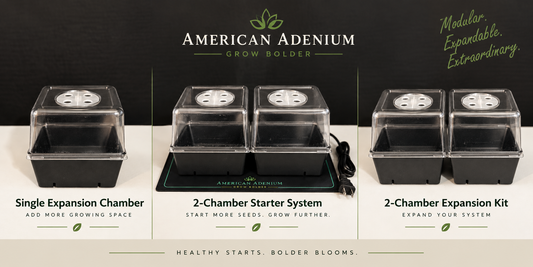
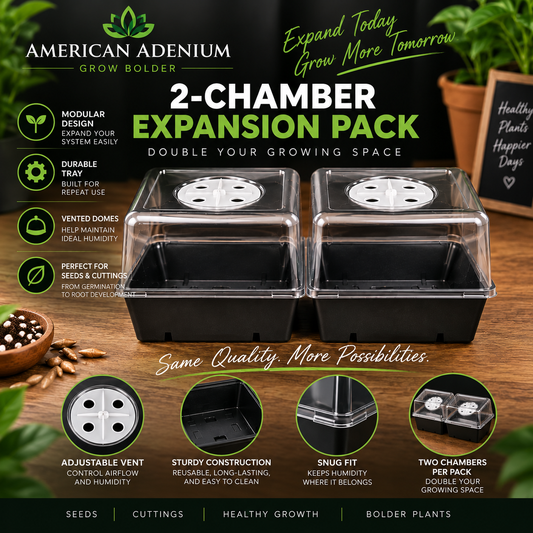
Germination and cuttings are a volume game with a narrow margin. You want warmth, consistent moisture, and airflow — and you want to be able to walk away from it for eight hours without losing the flat.

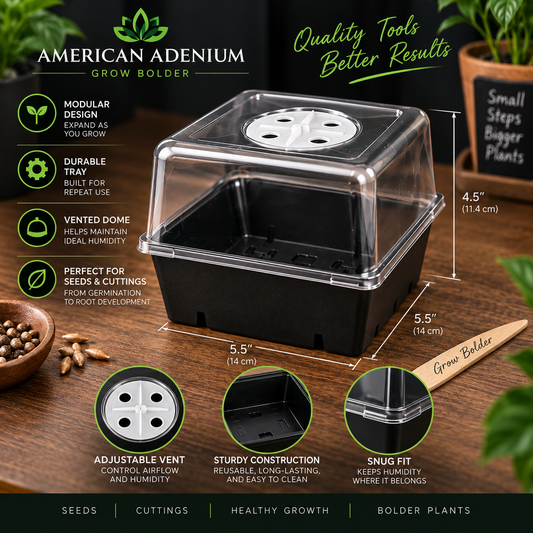
What matters here: cell depth (shallow is fine, deep is wasted media), drainage that actually drains, and a dome you can vent. I germinate Adenium and Pachypodium in trays on bottom heat and I want that seedling out of the humidity chamber and into airflow the moment the cotyledons open. Anything that traps stagnant moisture past that point is a damping-off problem waiting to happen.

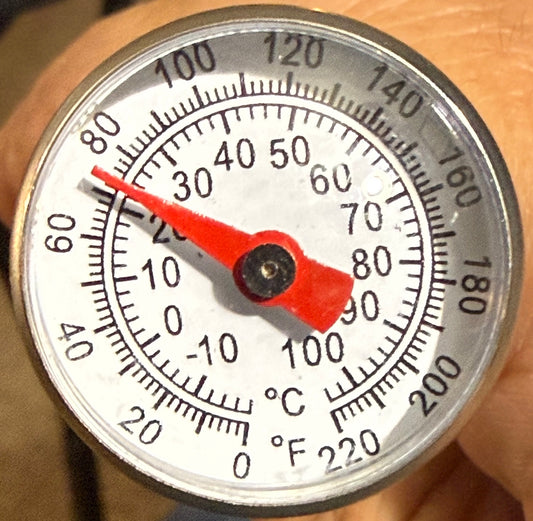
Zone 6 note: our spring germination window is short and our ambient temperatures are low. Bottom heat is not optional here the way it might be in Florida. Plan your propagation setup around holding 82–85°F at the root zone.

Pairs with: Desert Oasis Germination Media.


Containers

Grow-on containers are the years between seedling and specimen. This is where most caudex development happens, and it is where most of it gets lost.

The rule I follow: pot width matters more than pot depth, and pot volume should always be a little smaller than the grower is comfortable with. A slightly restricted root mass builds a thicker caudex. An overpotted plant builds root mass and a thin trunk, and it sits wet doing it — which in a Zone 6 spring is how you get rot.

Look for wide profiles, generous drainage, and material that dries evenly. Plastic holds moisture longer and is fine for fast-growing seedlings under high light. Terracotta and unglazed clay breathe and are more forgiving in a cold-climate greenhouse or a north-facing window in March.

Pairs with: Desert Oasis Potting Media.


Training Pots

This is the category most growers skip, and it is the one that separates a nice plant from a specimen.

A training pot is deliberately shallow and wide. It forces the root system to run laterally instead of diving, which does two things: it fattens the caudex, and it produces the exposed root flare that makes a mature Adenium worth what a mature Adenium is worth. Mesh and air-pruning designs go further, pruning root tips at the container wall and driving ramification back into the crown.

Timing, from my own bench:

  • Year 1: grow hard, don't train. Build biomass.
  • Year 2: first move to a shallow training pot. First root lift — raise the caudex just enough to expose the top of the flare.
  • Year 3+: lift a little more with each repot. Root prune at the same time. Patience compounds here.

Do not do this work on a plant that is not actively growing. In Zone 6 that means May through August, full stop. A root-pruned Adenium in October is a dead Adenium in January.

Pairs with: Desert Oasis Potting Media and Summer Top Dress.


Bonsai

Bonsai containers are the display end of the process, and for caudex plants they are also a cultural tool — a shallow bonsai pot keeps a mature specimen restricted, which is exactly what you want once you have the form you were after.

What I look for: adequate drainage holes (most decorative pots do not have enough — a single center hole is not enough for a fast-draining desert mix), tie-down wire holes so you can anchor a top-heavy caudex, and a footprint that visually balances the plant rather than fighting it. The general proportion that works: pot length roughly two-thirds the height of the plant, and depth no greater than the caudex diameter.

Glazed or unglazed is a real decision, not a style question. Unglazed breathes and dries faster, which suits Adenium, Pachypodium, and most cacti. Glazed holds moisture longer — usable, but only if you are disciplined with your watering and your media is aggressive.

Pairs with: Desert Oasis Potting Media and Zen Media.


WHAT WE'RE GROWING WITH

The containers in this collection are half the system. The media is the other half.

  • Desert Oasis Germination Media — for propagation trays and cell flats. Fast-draining, low-organic, formulated for caudex seedlings that rot in standard seed-starting mix.
  • Desert Oasis Potting Media — the workhorse for grow-on containers, training pots, and bonsai. This is what makes a shallow pot survivable in a humid Ohio Valley summer.
  • Desert Oasis Summer Top Dress — apply after any root work or repot to stabilize the surface and reduce evaporation without holding water at the crown.
  • Seeds — if you're setting up a propagation bench, start with genetics worth the bench space. Our Collector's Reserve lines are graded and sourced direct.

Full product line: Desert Oasis Products 

Choosing the Right Container for Caudex Plants

How do I pick a training pot size? Go one size smaller than feels right. A pot roughly 1–2 inches wider than the current root mass, and no deeper than it needs to be, will build caudex faster than a generous pot. Restriction is the point.

When should I repot and root prune? Active growth only. In Zone 6 that is May through August. Root work in fall or winter, when the plant cannot push new roots before dormancy, is the single most common way growers kill an otherwise healthy Adenium.

Do I need special media? Yes. Standard potting soil holds water far too long for a shallow container in a cold-climate spring. Use a fast-draining mineral-based media — this is exactly why we formulated Desert Oasis.

Plastic, terracotta, or ceramic? Plastic for fast growth under high light. Terracotta and unglazed clay for cold-climate growers and anyone still calibrating their watering. Glazed ceramic for display specimens where you have your watering dialed in.

How many drainage holes does a bonsai pot need? More than one. Decorative pots ship with a single center hole and that is not adequate for a mineral mix. Drill additional holes or choose a pot built for the purpose.

Grown, tested, and shipped from Zone 6 Northern Kentucky. If it survives our winters and our humidity, it will work where you are.